Full mouth rehabilitation
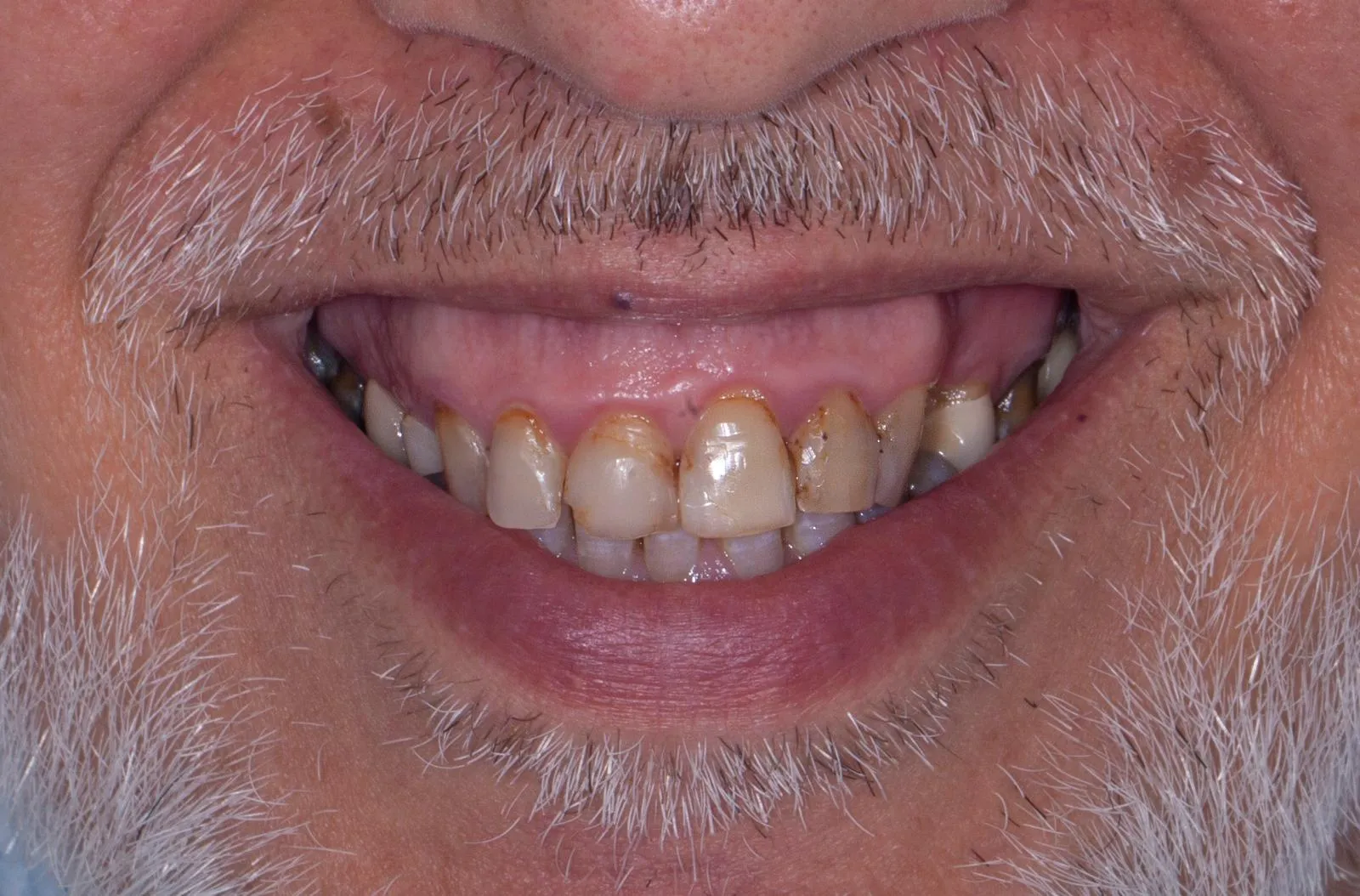
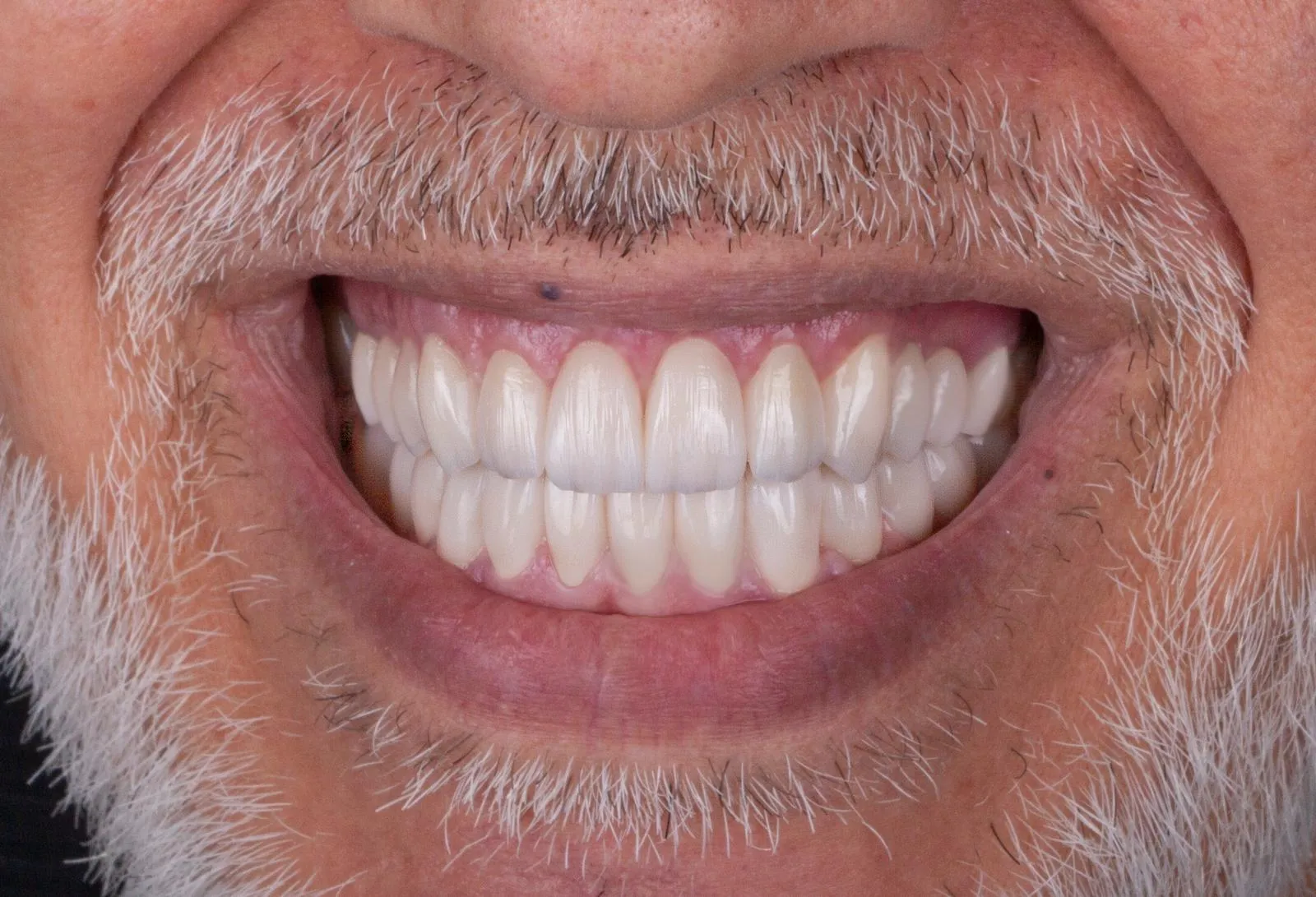
Dr. Nabeel rebuilt worn, stained and missing teeth with full upper and lower ceramic crowns and bridges.
See the full caseFull mouth rehabilitation rebuilds the teeth of both jaws together when many teeth are worn, broken or missing and the bite no longer works. It is the heart of prosthodontics and the centre of Dr. Nabeel Al Nahhas's work. He began his career with a diploma in dental technology, holds the Jordanian Board in Prosthodontics, and is known for precise smile design in complex full-arch cases. He plans from the final bite and smile backwards, combining implants, crowns, bridges and bone reconstruction in one plan.
Message on WhatsApp Dr. Nabeel Safwat Al NahhasConsultant Prosthodontist, ImplantologyMOHAP licence D21482
Free consultation with digital X-ray, a 3D CBCT scan, photographs, and a check of the jaw joints, muscles and bite.
Your new teeth and bite are designed first, digitally or on models, so you see the result before anything changes. You receive the plan in writing.
When the bite height changes, you wear temporary teeth first to enjoy the new comfort, speech and appearance.
Gum care, root canals, bone reconstruction, implants and final zirconia or ceramic crowns, each in its planned order.
A night guard protects your new teeth, and regular check-ups keep the result stable.
Dr. Nabeel rebuilt worn, stained and missing teeth with full upper and lower ceramic crowns and bridges.
See the full case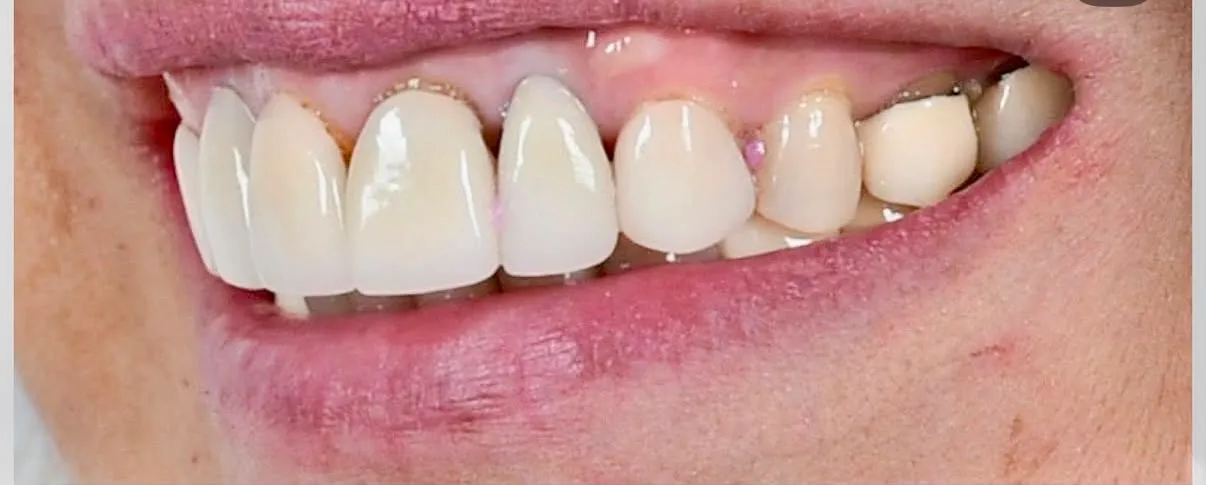
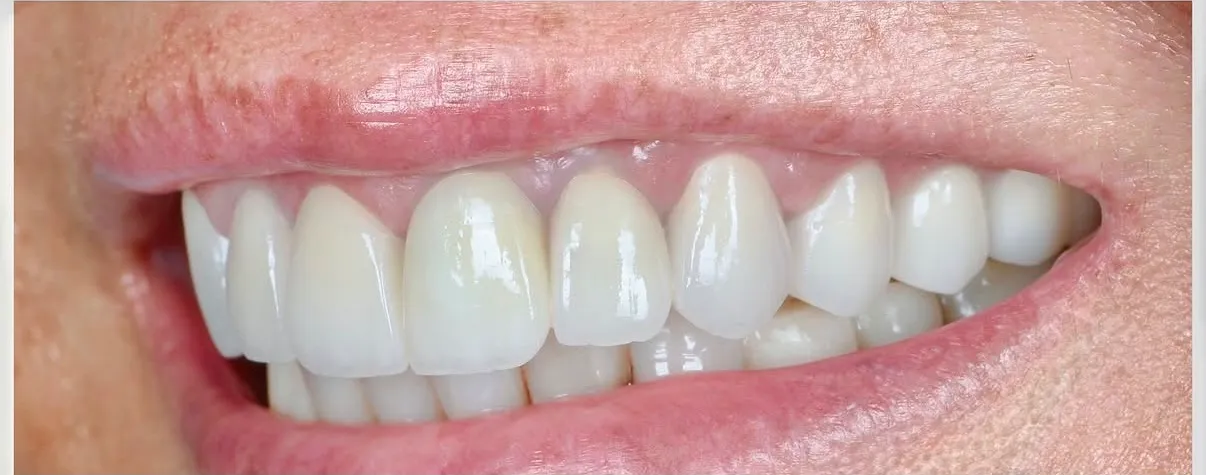
Dr. Nabeel restored the upper teeth with new crowns, side view.
About this treatment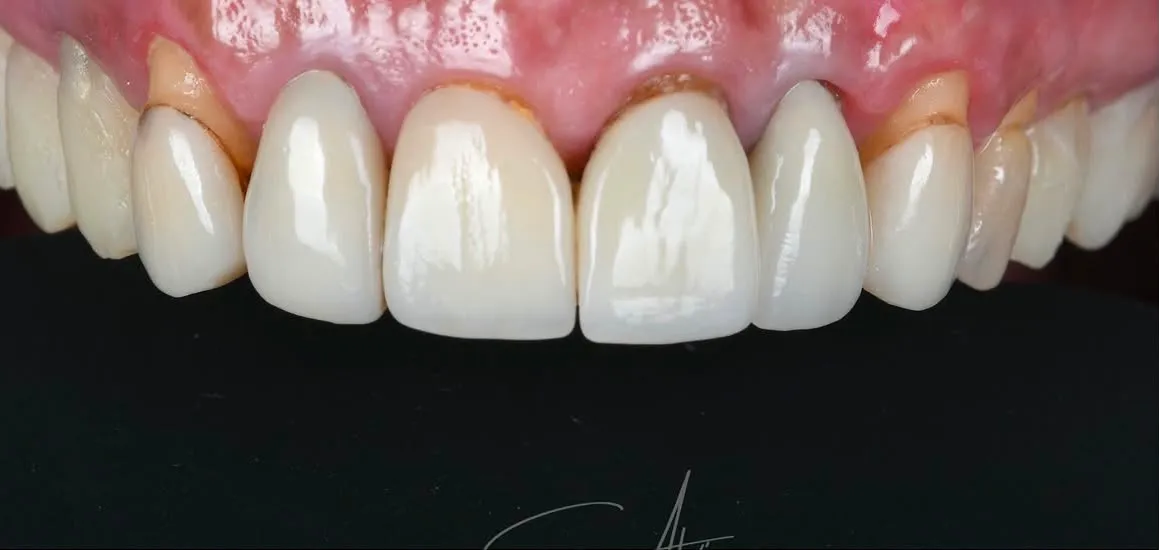
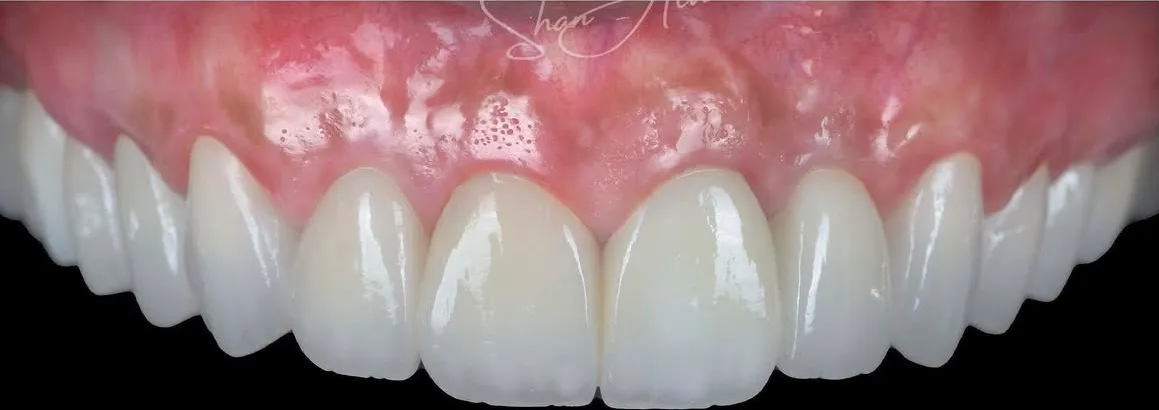
Dr. Nabeel replaced old crowns with dark margins with new ceramic crowns.
About this treatment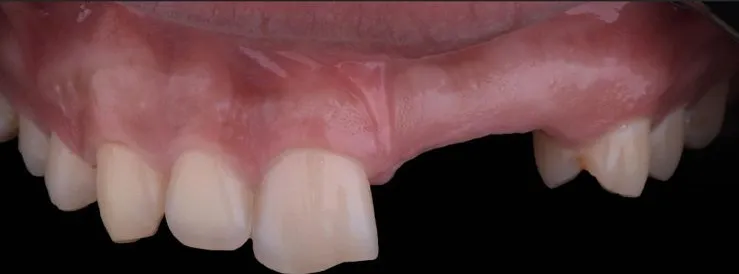
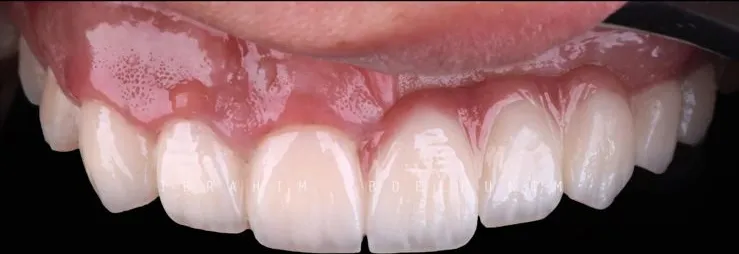
Dr. Nabeel restored the missing upper front teeth with a bridge and veneers.
About this treatmentCrowns, inlays and veneers rebuild teeth with healthy roots, keeping as much natural tooth as possible.
Implants and bridges replace the teeth that are lost. Dr. Nabeel combines both in one plan.
Dr. Nabeel explains, in a television interview, how missing teeth are replaced: bridges, removable dentures and dental implants, the modern approach, with digital CAD/CAM teeth within 24 hours.
Thank you for hosting me on this wonderful evening. First, I would like to explain to you that prosthodontics is a technique for replacing missing teeth in different ways. It starts with fixed prostheses, which are called bridges, which involve a technical procedure that includes shaving or drilling the teeth next to the missing tooth, or they can be removable teeth, removable prostheses, which are made by taking impressions of the edentulous jaws, as we call them, meaning the missing teeth, and they are sent to the dental laboratory, which makes the removable prostheses. As for dental implants, that is the modern approach, in which the missing tooth is replaced directly, without having to shave, drill or even cut any living part of the teeth, or even of the gum in the areas next to the missing space. Teeth can be fitted within 24 hours using the new technologies, namely digital impressions, the digital technologies known as CAD/CAM, which carry out an optical scan by computer of the missing teeth and the prepared teeth, and it is sent by multimedia, by computer, online, to the dental laboratory, which in turn, with this technology, builds these teeth and sends them back in less than 24 hours. Yes, there is, let's say, conventional implantology, which was first discovered in the sixties, what is called conventional implantology, and the one who discovered it was Professor Dr. Brånemark from Sweden, who was the first to make this discovery: that there is a metal compatible with the human body, namely titanium, and in light of this, dental implantology began to spread, first in Europe, and then throughout the whole world. As for the trends we are talking about: conventional implantology is the implantology that was discovered by Professor Dr. Brånemark, and it has continued from that time until now, and there is a group of doctors, or rather a group of cases, that call for this technique. As for the modern techniques that have entered our profession, which is dental implantology, they are the immediate implant technique and the one-day implant technique, which, honestly, are causing a kind of confusion for everyone. Immediate implants are different from one-day implants. Immediate implantation is a technique that was also discovered, or put into practice, using a particular technique: they place a large number of implants, and impressions are taken of these implants and the prostheses are placed on them.
When many teeth are worn, broken or missing, or the bite itself has changed, a full plan gives a far more lasting result than treating teeth one by one. Dr. Nabeel shows you the plan at your free consultation.
You have fixed teeth from the start with same-day implant techniques, and Dr. Nabeel completes the rest in planned stages, with every date in your written plan.
No. Temporary teeth are planned for every stage, so you eat and speak normally while the final work is made.
The consultation is free and includes a digital X-ray, and Dr. Nabeel gives you your plan and its cost in writing.
Share photos of your smile and bite on WhatsApp, and Dr. Nabeel will tell you where to begin.
Message on WhatsAppCall: +971 56 355 3326