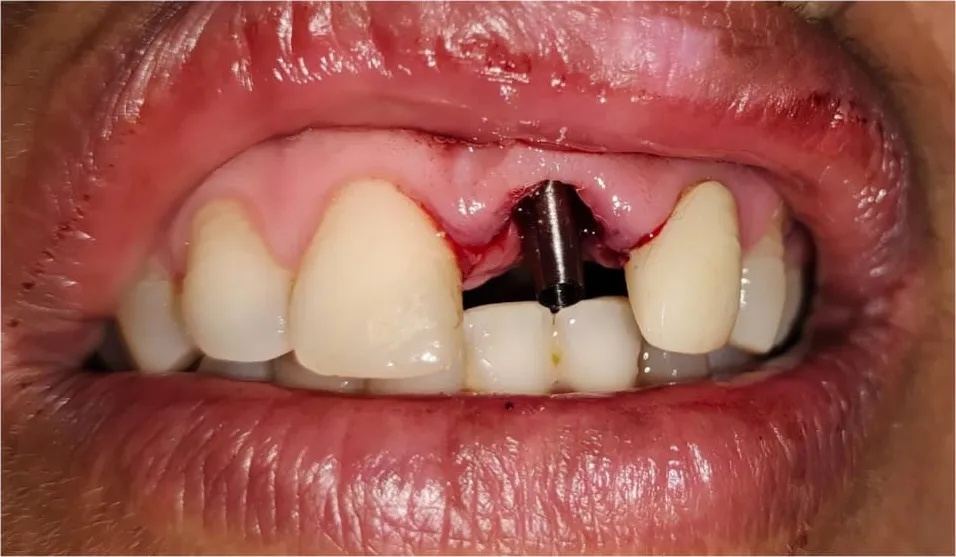
 Implant and abutment
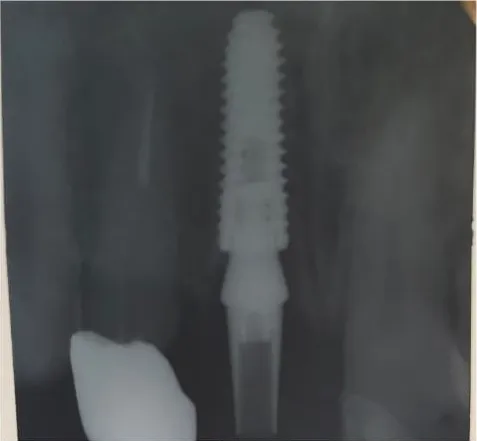 X-ray
X-ray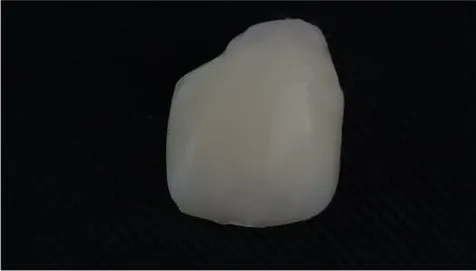 Ceramic crown
Single front-tooth implant, start to finish
Implant and abutment, X-ray check, ceramic crown and the final smile.
See the full caseA dental implant replaces the root of a missing tooth, and a crown, bridge or full arch of teeth is fixed on top. Dr. Nabeel Al Nahhas is a Consultant Prosthodontist with more than 28 years of experience, and he places single implants, multiple implants, All-on-4 full arches, same-day, digital, graftless, pterygoid, zygomatic, flapless and laser-assisted implants. He designs the final tooth first, then places the implant exactly where it supports it. The consultation is free and includes a digital X-ray.
Message on WhatsApp Dr. Nabeel Safwat Al NahhasConsultant Prosthodontist, ImplantologyMOHAP licence D21482
Examination, digital X-ray and a CBCT scan of the bone. You receive your plan and its cost in writing.
The crown or bridge is designed first, and the implant position is planned on your 3D scan to support it.
A short, gentle procedure under local anaesthesia. Digital and flapless techniques mean no gum cutting and no stitches.
With same-day and graftless techniques, teeth are fixed on the implants within 24 hours.
The final teeth are made and fitted, and Dr. Nabeel reviews them at your check-ups.
 Implant and abutmentX-rayCeramic crown
Implant and abutment, X-ray check, ceramic crown and the final smile.
See the full case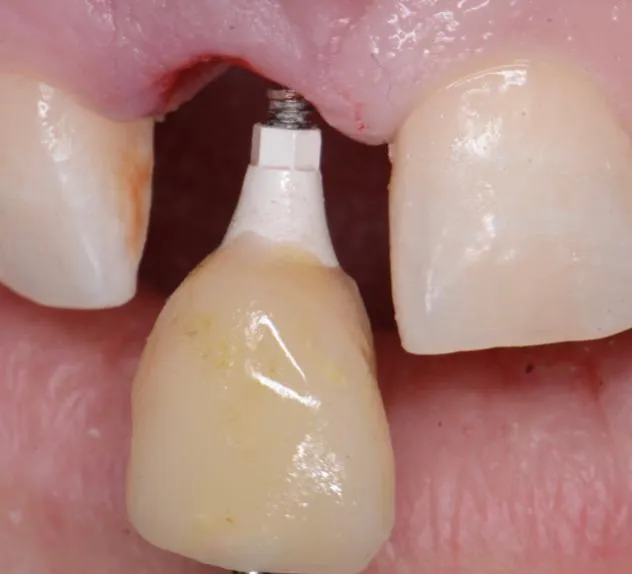
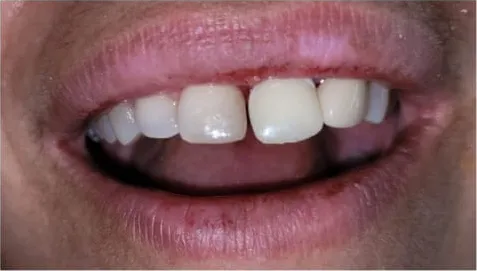
Front-tooth implant crown try-in on a zirconia abutment.
Replaces the root and the tooth together, leaves the neighbouring teeth untouched and preserves the bone where the tooth was lost.
Holds a false tooth on the teeth either side, which are drilled down to carry it. An implant replaces the tooth directly, with nothing cut from your healthy teeth.
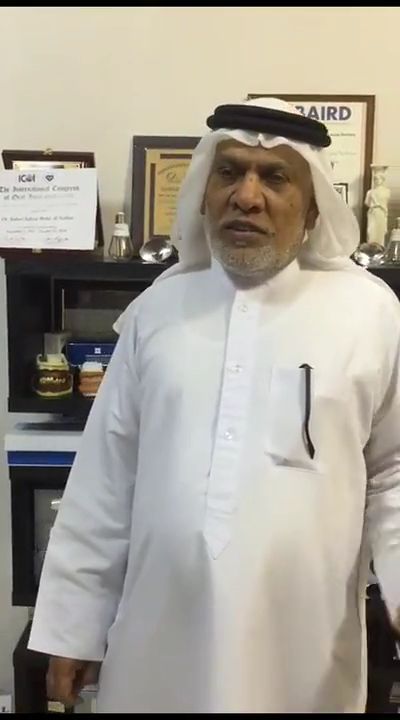
Dr. Nabeel explains, in a television interview, how missing teeth are replaced: bridges, removable dentures and dental implants, the modern approach, with digital CAD/CAM teeth within 24 hours.
Thank you for hosting me on this wonderful evening. First, I would like to explain to you that prosthodontics is a technique for replacing missing teeth in different ways. It starts with fixed prostheses, which are called bridges, which involve a technical procedure that includes shaving or drilling the teeth next to the missing tooth, or they can be removable teeth, removable prostheses, which are made by taking impressions of the edentulous jaws, as we call them, meaning the missing teeth, and they are sent to the dental laboratory, which makes the removable prostheses. As for dental implants, that is the modern approach, in which the missing tooth is replaced directly, without having to shave, drill or even cut any living part of the teeth, or even of the gum in the areas next to the missing space. Teeth can be fitted within 24 hours using the new technologies, namely digital impressions, the digital technologies known as CAD/CAM, which carry out an optical scan by computer of the missing teeth and the prepared teeth, and it is sent by multimedia, by computer, online, to the dental laboratory, which in turn, with this technology, builds these teeth and sends them back in less than 24 hours. Yes, there is, let's say, conventional implantology, which was first discovered in the sixties, what is called conventional implantology, and the one who discovered it was Professor Dr. Brånemark from Sweden, who was the first to make this discovery: that there is a metal compatible with the human body, namely titanium, and in light of this, dental implantology began to spread, first in Europe, and then throughout the whole world. As for the trends we are talking about: conventional implantology is the implantology that was discovered by Professor Dr. Brånemark, and it has continued from that time until now, and there is a group of doctors, or rather a group of cases, that call for this technique. As for the modern techniques that have entered our profession, which is dental implantology, they are the immediate implant technique and the one-day implant technique, which, honestly, are causing a kind of confusion for everyone. Immediate implants are different from one-day implants. Immediate implantation is a technique that was also discovered, or put into practice, using a particular technique: they place a large number of implants, and impressions are taken of these implants and the prostheses are placed on them.
Dr. Nabeel on implants without bone grafting: implants placed in specific positions and angles, with teeth fixed within 24 hours.
No, no, no, no, no. Who told you that you're not suitable for dental implants? Dental implants are possible using certain techniques. If they told you that you can't have dental implants because your jaw is weak, that's old talk. Using modern techniques, namely dental implants without bone grafting, by trained dentists experienced in dental implants and prosthodontics, implants can be placed in specific positions, specialised implants at specific angles, and the teeth fixed onto them within 24 hours. This is a modern technique, and all you need to do is turn to specialised, experienced dentists. This is Dr. Nabeel Safwat Al Nahhas, consultant in prosthodontics and dental implants, with more than twenty-eight years of experience in the United Arab Emirates.
Bone loss is natural and doesn't rule out implants. Dr. Nabeel places implants even with bone loss, using a 3D scan and angled implants.
Are you over forty and have bone loss? Don't rush to judge. Bone loss at this age is normal, it doesn't mean you can't have implants. The truth is, the amount of bone isn't the only thing that matters. What matters most is how we plan the case. And now, thanks to modern techniques and specialised angled implants, we can place implants even with bone loss, and sometimes without a bone graft, without patching, without a long wait. But before any step, I have to do a 3D scan and a thorough examination, so we can choose the best solution for you. This is Dr. Nabeel Safwat Al Nahhas, consultant in prosthodontics and dental implants. Book your consultations at Adamah Center, and don't think it's too late. You're still young at forty!
You're not paying for a piece of titanium; you're paying for more than 30 years of research behind it. Dr. Nabeel's advice: don't shop for price, shop for results and quality.
Hi! Why does some clinic charging 2,000 dirham for one dental implant while other clinics are charging 5,000 dirham for one dental implant? Is it scam? Let's talk in reality. You are not paying for the piece of rods of titanium that we're going to place it to replace the root. You are paying for the research that has been done behind this piece of titanium or rod that we're going to place it to replace the root. It's more than 30 years of research quality that has been done into this. Don't choose the cheap brands that their parts may disappear after five years. Please don't shop for price, shop for results and quality. You are most welcome for a free consultation. I am Dr. Nabeel Al Nahhas, consultant prosthodontist and implantology, with 28 years of experience in UAE. Thank you.
An animated guide to the three ways implants replace teeth: a single tooth, a denture that snaps onto implants, and a full fixed arch.
A single tooth implant can be inserted in a simple procedure that doesn't affect any of the other teeth. An implant-retained denture works by securing two to four implants and then using a denture to snap into place. The full fixed arch is the most secure option for the full set of upper or lower teeth that is permanently implanted. Dental implants might be the answer to a healthier, happier smile. From a single tooth implant to an implant-retained denture or a full fixed arch, dental implants have many options that fit a variety of needs. Fill out our 20-second eligibility quiz to see if dental implants are right for you, because bigger smiles make for a brighter future.
The consultation is free and includes a digital X-ray, and Dr. Nabeel gives you your plan and its cost in writing.
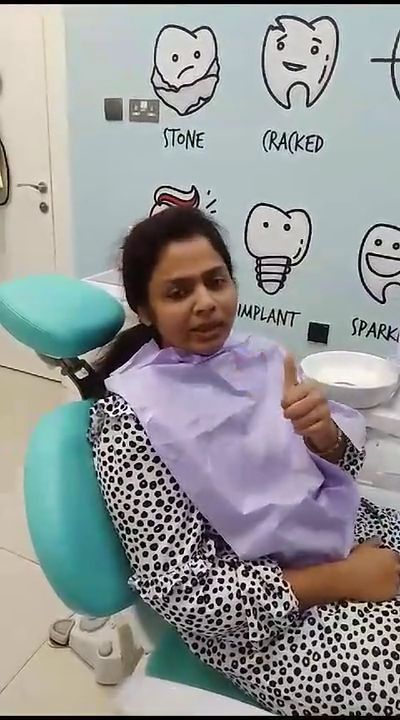
No. Dr. Nabeel's digital implant technique is painless: no pain, no swelling, no gum cutting and no stitches. His patients say it in their own videos: no pain.
With same-day and graftless techniques, teeth are fixed on the implants within 24 hours. The final crown or bridge follows once the implant has bonded with the bone.
No. As Dr. Nabeel says in his video, bone loss over 40 is normal and does not stop you having implants. With a 3D scan and specialised angled implants, he places implants even with bone loss, without grafting and without a long wait.
Yes. Send a recent panoramic X-ray or clear photos on WhatsApp and Dr. Nabeel will tell you the next step.
With daily cleaning and regular check-ups, your implants last for decades. Dr. Nabeel plans the final teeth first, which puts the bite forces where they belong, and every implant is planned on a 3D scan.
Dr. Nabeel's patients are back to normal the next day. Nadia, from Ireland, filmed herself the morning after her implant: no pain, nothing bothering her, and she was surprised how easy it was.
Missing one tooth or many? Message Dr. Nabeel on WhatsApp. The consultation and digital X-ray are free.
Message on WhatsAppCall: +971 56 355 3326